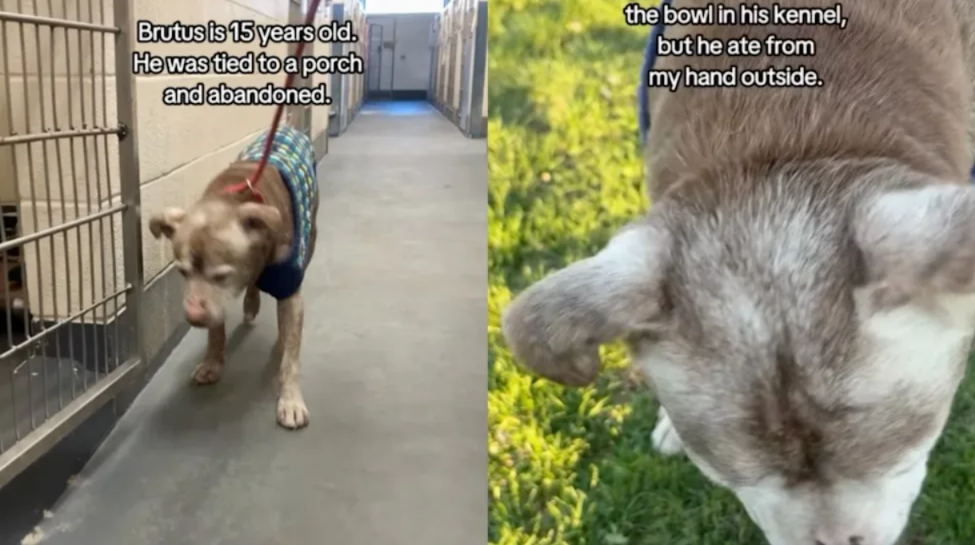
He arrived at the shelter already carrying more history than anyone could fully see.
An older dog. Abandoned. Left behind without explanation that made sense to the people now caring for him.
And still, days turned into weeks.
But no one came back.
There’s something particularly heavy about senior dogs in shelters. Not because they are difficult—but because they often understand more than they can express.
They settle quickly, learn routines fast, and tend to wait in ways that feel less like confusion and more like memory.
This dog was no different.
He stayed quiet in his space, watching everything around him without urgency. No frantic pacing. No loud demands.
Just a steady presence that suggested he had once known a different kind of life—and was still trying to understand why it had changed.
Staff noticed early on that he wasn’t the type to push forward for attention.
He didn’t compete with younger dogs for affection or react strongly when people passed by. Instead, he observed. Calmly. Patiently.
As if he still believed someone familiar might walk through the door at any moment.
But shelters don’t work that way.
People come and go quickly. Decisions are made in seconds.
And dogs like him—older, quieter, less immediately “eye-catching”—often end up waiting longer than anyone expects.
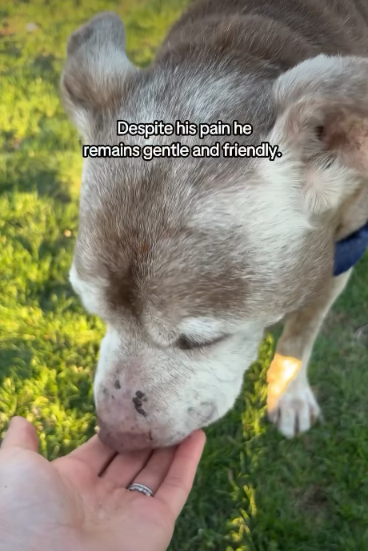
Each day followed a similar pattern.
Visitors would arrive. Voices would rise with interest as they moved through the kennels.
Laughter would break out near younger dogs, especially those with energy that matched the excitement of the moment.
And he would watch it all from where he was.
Not withdrawn.
Not broken.
Just… overlooked.
What makes situations like this so difficult is that nothing is wrong in an obvious way.
There is no behavior issue to correct, no clear obstacle to explain why a dog like this hasn’t been chosen yet.
It often comes down to timing, perception, and the simple reality that older dogs are too often passed over for younger ones.
But senior dogs bring something different into a home.
Stability.
Understanding.
A kind of quiet companionship that doesn’t need to be trained or shaped—it’s already there.
Still, none of that changes the waiting.
For this dog, the days stretched forward in a steady rhythm. Meals. Cleaning.
Brief interactions with staff who tried, in small ways, to reassure him that he was safe, even if he hadn’t yet been chosen.
And he responded the only way he seemed to know how.
With patience.
There’s a kind of resilience in that behavior that often goes unnoticed. Not the loud kind. Not the dramatic kind.
But the steady endurance of a dog who has not given up hope, even when there is no immediate sign of change.
Sometimes, he would lift his head when someone paused near his kennel. Other times, he would simply watch them continue walking.
Always aware.
Always waiting.
Stories like his are not rare in shelters.
Senior dogs across the world experience similar patterns—arriving through no fault of their own, adjusting quickly, and then remaining in a space where they are often seen but not chosen.
Yet every so often, something shifts.
A second look.
A longer pause.
A person who doesn’t move on immediately.
And that is often where the story changes direction.
Not in the noise of the shelter.
But in the quiet moment when someone finally stops long enough to really see him.
For now, his story remains one of waiting. Not forgotten, but still unfolding.
Because even in places filled with movement and constant change, there are dogs who hold onto the same quiet hope every day.
That someone will come.
And this time, stay.