On an airplane, most of us barely remember to buckle our own seatbelt—let alone follow every safety rule to the letter. But one dog on a recent flight made sure her human didn’t slip up even once.
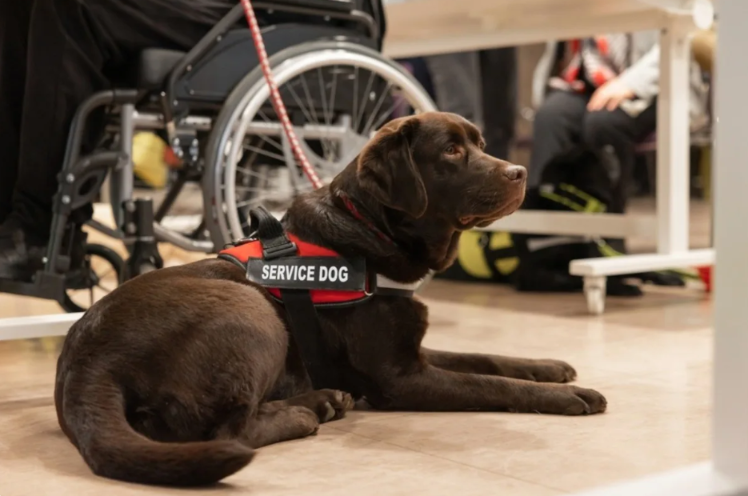
Her name is Renegade, or “Ren” for short, and she’s not just any dog… she’s a service dog with a serious sense of responsibility.
Ren has clearly mastered her training. Unlike typical travel clips that show pups napping, yawning, or quietly riding in laps, Ren’s time on the plane went viral because of what she did — not just how cute she looked.
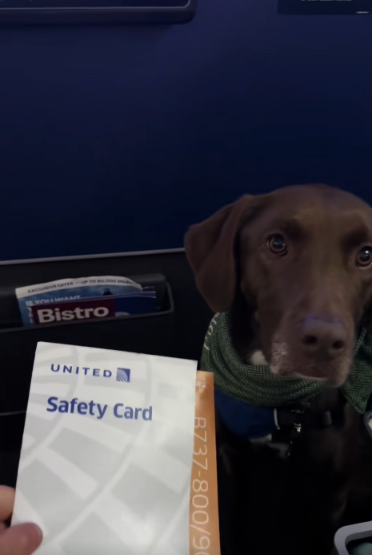
In a now‑popular video, Ren seems to make it her duty to make sure her mom follows all the safety procedures before and during the flight.
In the clip shared online, there are moments where Ren nudges, watches, and stays alert — essentially acting like a tiny flight attendant with a very serious checklist.
She isn’t barking or making a fuss; she just sits attentively, eyes sharp, like she’s making sure that everyone around her (especially her human) does exactly what they’re supposed to.
That behavior struck a chord with viewers because it’s both adorable and very relatable. Service dogs are trained to assist and support their handlers in specific ways.
They’re there to help with tasks tied to disabilities — physical, psychiatric, or sensory — and part of that job includes helping the handler stay calm and organized in situations that might otherwise trigger stress or confusion.
But Ren’s airline etiquette goes a step further. Instead of just being by her person’s side, she seems acutely attuned to the rules of flying — the seatbelt sign, the attentiveness during takeoff and landing, and the general seriousness of the cabin environment.
It’s as if she’s silently reminding everyone around her that patience, order, and awareness matter up here in the air.
People reacted instantly once the video started spreading. Comments poured in about how responsible and “professional” Ren looked. Many viewers joked that she could work for the airline, leading safety demos or at least helping flight attendants with enforcement during long flights.
But beyond the laughs, there was genuine appreciation for her focus and composure in a setting that can be inherently stressful for many dogs and humans alike.
What makes Ren’s behavior especially impressive is that flying isn’t a natural place for dogs — unfamiliar sounds, crowded spaces, and the pressurized cabin can be confusing or overwhelming for many pets.
Yet Ren stays composed, aware, and seemingly in charge of her surroundings. Whether she’s checking in with her human, watching other passengers, or just sitting calmly as the plane climbs and descends, she gives the impression of being utterly dependable.
Her example also highlights the remarkable bond between service animals and their people. These dogs aren’t just well‑trained; they’re deeply connected to the emotional and physical rhythms of their handlers.
That connection translates into support that’s bigger than tricks or obedience — it’s about real presence and subtle communication in moments that matter.
In the end, Ren’s travel behavior isn’t just funny or cute; it’s meaningful. She reminds us that dogs — especially trained service dogs — aren’t just companions.
They’re attentive partners who can help their humans navigate the world with confidence, order, and safety. And in an environment like an airplane — where rules keep everyone secure — that partnership can be both heartening and impressive to watch.
So next time you’re on a flight and notice a wagging tail beneath a seat, don’t discount it as just another passenger’s pet.
That dog might be observing more than just the view — they might be making sure you’re doing it right too.