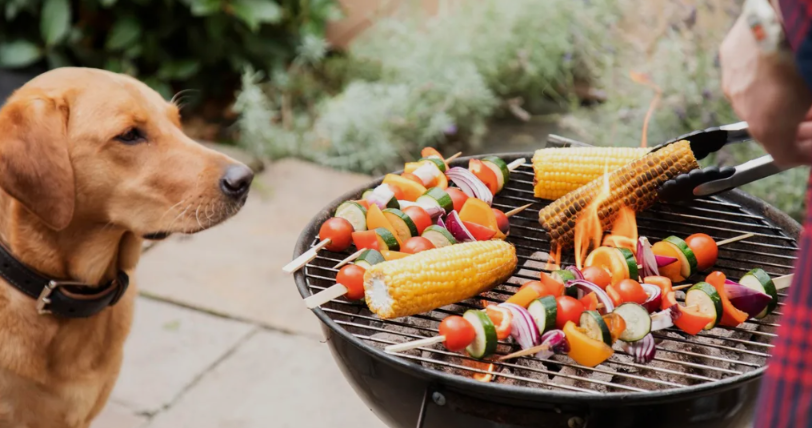
When the grill comes out, most dogs think the same thing:
“Something good is about to fall.”
And they’re usually right.
Backyard barbecues are full of irresistible smells, dropped scraps, open trash bins, and excited guests who don’t always know what’s safe to share.
But what feels like a fun summer gathering for humans can quietly turn into a high-risk environment for dogs.
Veterinary experts consistently warn that BBQ season brings a spike in emergency vet visits — and most of them are preventable.
It usually starts with food.
Not all “people food” is safe for dogs, even if it looks harmless.
Common cookout items like onions, garlic, grapes, raisins, chocolate, and alcohol are toxic to dogs, even in small amounts.
Fatty foods such as burgers, hot dogs, and rich meats can also trigger stomach upset or more serious conditions like pancreatitis.
Cooked bones are especially dangerous because they can splinter and cause choking or internal injuries.
And it’s not just what’s on the plate.
It’s what gets left behind.
Aluminum foil, plastic wrap, skewers, corn cobs, and grease trays are all common BBQ leftovers that can cause blockages or injuries if swallowed.
Even something as simple as a dropped kebab stick can become a serious hazard if a curious dog gets to it first.
Then there’s the grill itself.
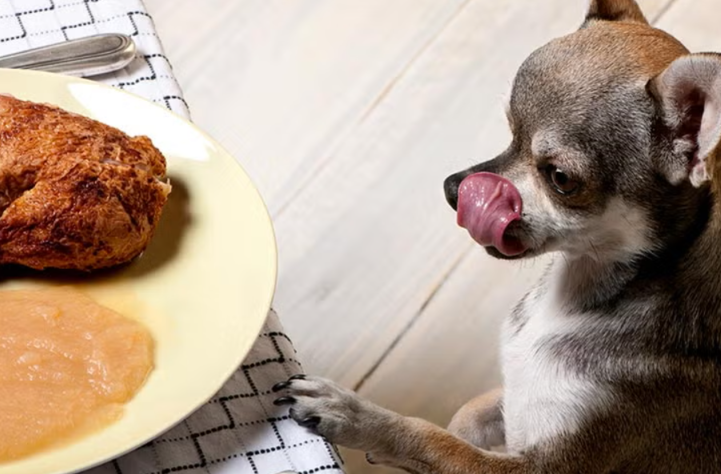
A hot grill is an obvious burn risk, but many owners underestimate just how fast accidents can happen.
A dog sniffing too close, brushing against metal, or stepping near spilled grease can get hurt in seconds.
That’s why experts recommend creating a strict “no-dog zone” around any cooking area.
But the grill is only part of the story.
Heat is another silent danger.
Dogs don’t cool themselves the same way humans do — they rely mainly on panting.
In hot, crowded environments like summer cookouts, that system can fail quickly.
Without shade and constant access to water, dogs can overheat before owners even realize there’s a problem.
Early signs like heavy panting, drooling, weakness, or confusion can escalate into heatstroke, which is a medical emergency.
Then comes the chaos factor.
BBQs mean open gates, guests coming and going, loud noises, fireworks in some cases, and constant distractions.
Even well-trained dogs can bolt if something startles them or if they slip out unnoticed.
That’s why secure fencing or leashes are often recommended during gatherings, especially in unfamiliar environments.
And perhaps the most overlooked danger?
Trash.
To a dog, a garbage bin after a BBQ is basically a jackpot.
Leftover bones, greasy foil, half-eaten food, and sweet-smelling wrappers can all be tempting — and dangerous.
Once a dog gets into the trash, it often becomes an emergency fast.
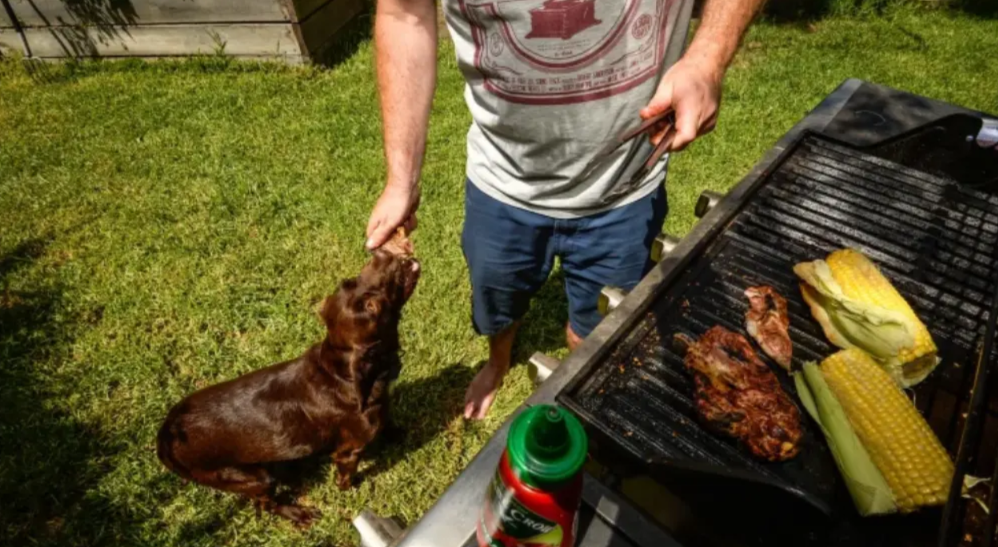
So what does a safe BBQ actually look like for dog owners?
It’s not about excluding your dog from the fun.
It’s about controlling the environment.
Simple steps make a big difference:
Keep food covered and out of reach.
Set up a shaded “safe zone” with water.
Block access to grills and prep areas.
Ask guests not to feed your dog.
Secure trash bins immediately after use.
Some owners even prepare dog-safe treats like plain grilled chicken or vegetables so their pets aren’t tempted by unsafe scraps — but even that should be done carefully and without seasoning or sauces.
At its core, BBQ safety for dogs isn’t complicated.
It’s just awareness applied in real time.
Because most accidents don’t happen from one huge mistake.
They happen from small, invisible ones:
A lid left open.
A plate left unattended.
A gate not fully closed.
A moment of distraction during a busy gathering.
And dogs don’t understand any of it.
They only understand smell, excitement, and opportunity.
So while you’re enjoying the fire, the food, and the company, the safest thing you can do for your dog is simple:
Stay one step ahead of what they can reach.
Because at a BBQ, safety isn’t about saying no to your dog.
It’s about making sure they never get the chance to say yes to the wrong thing.