Most dog owners have done it.
You stand in the pet food aisle, flip over a bag, and stare at the label like it’s written in another language.
Long ingredient lists. Scientific terms. Words that sound healthy—but don’t actually tell you anything.
So you do what most people do.
You trust the front of the bag.
“Premium.”
“Natural.”
“Healthy.”
But here’s the uncomfortable truth:
The front of the bag is marketing.
The back of the bag is reality.
And once you understand how to read it, everything changes.
It Starts With the Basics: What Your Dog Actually Needs
Before you even read a label, you need to understand what matters most.
Dogs don’t need trendy ingredients.
They need nutrients.
At the core, every dog’s diet should include protein, fats, carbohydrates, and water—these are the building blocks of survival and overall health.
Everything else on the label? It supports those.
Vitamins. Minerals. Fiber. Additives.
But if those core nutrients aren’t right, nothing else fixes it.
The First Ingredients Tell You Everything
Here’s the rule most people don’t know:
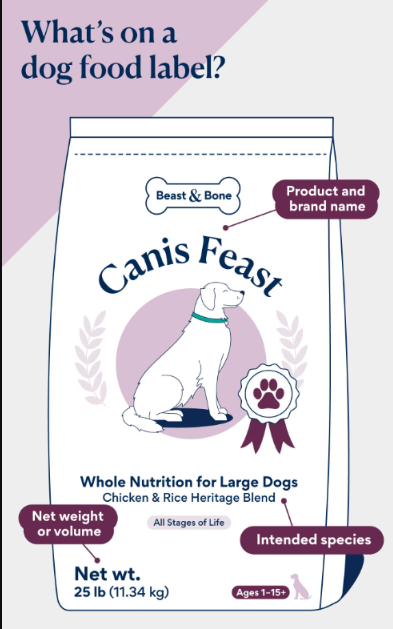
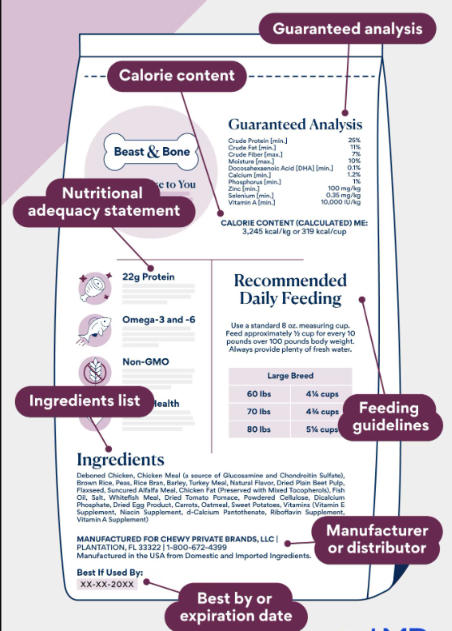
Ingredients are listed by weight, from highest to lowest.
That means the first few ingredients make up the majority of what your dog is eating.
So what should you look for?
A clear, named protein source at the top—like chicken, beef, or fish.
Why?
Because protein is essential for muscle, skin, and overall body function.
After that, you’ll usually see carbohydrates like rice or potatoes, then fats and other nutrients.
If the first ingredients are vague or heavily processed, that tells you something too.
Because the top of the list isn’t decoration.
It’s the foundation.
Not All “Scary” Ingredients Are Bad
This is where things get misunderstood.
You’ve probably heard people warn about “by-products” or “fillers.”
But here’s the nuance:
- By-products can include organ meats like liver—rich in nutrients
- Fiber sources help digestion and gut health
- Meals (like chicken meal) are concentrated protein sources
In other words, not everything that sounds unpleasant is harmful.
Some of it is actually useful.
The real issue isn’t whether an ingredient sounds nice.
It’s whether it serves a purpose.
Understanding the “Guaranteed Analysis”
Flip the bag over, and you’ll see something called the guaranteed analysis.
This section shows percentages of key nutrients like:
- Protein
- Fat
- Fiber
- Moisture
These numbers give you a snapshot of what’s inside.
Higher protein doesn’t always mean better—but it does tell you how the food is structured nutritionally.
Think of it as the “nutrition facts” label for your dog.
The AAFCO Statement (The Most Important Line You’re Probably Ignoring)
Buried somewhere on the label is a sentence most people skip.
But it might be the most important one:
The nutritional adequacy statement.
This tells you whether the food is “complete and balanced” for your dog’s life stage—puppy, adult, or senior.
Without this, the food may not meet basic nutritional standards.
It doesn’t matter how pretty the packaging is.
If it’s not complete and balanced, it’s not a full diet.
Calories and Feeding Guidelines Matter More Than You Think
Another overlooked detail?
Calories.
Dog food labels list calorie content per cup or can, which helps you avoid overfeeding or underfeeding.
And while feeding guidelines are just estimates, they give you a starting point based on your dog’s size and needs.
Because even the best food can cause problems if portions are off.
Ingredients to Be Careful With
Most commercial dog foods are safe—but there are a few things to watch:
- Artificial preservatives like BHA or BHT
- Ingredients your dog is sensitive to
- Raw or unsafe additives that can carry bacteria risks
Some ingredients can be harmful long-term or trigger allergies depending on the dog.
This isn’t about fear.
It’s about awareness.
The Biggest Mistake Dog Owners Make
Here it is:
They read the label… but don’t know what matters.
So they focus on buzzwords instead of structure.
They choose based on branding instead of ingredients.
They assume “expensive” means “better.”
But once you understand the label, you stop guessing.
You start evaluating.
What This Really Comes Down To
Feeding your dog isn’t just a routine.
It’s a daily decision that affects their:
- Energy
- Health
- Longevity
- Quality of life
And the label?
That’s your only direct window into what you’re actually giving them.
Not the commercials.
Not the packaging.
Not the claims.
Just the facts.
Because at the end of the day, your dog doesn’t care what the bag says.
They trust you.
And learning how to read that label?
That’s one of the simplest—and most powerful—ways to return that trust every single day.