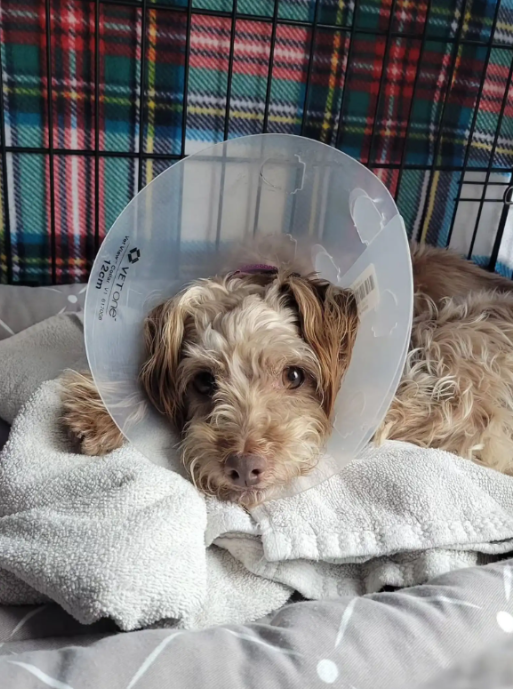
At a busy adoption event, the energy is usually hopeful.
People moving from kennel to kennel, voices soft with excitement, puppies drawing attention with every tiny movement.
But in one quiet corner, a senior dog sat watching it all unfold.
And no one was choosing her.
She didn’t bark for attention. She didn’t press against the front of her space or try to compete with the excitement around her.
Instead, she simply sat there—calm, observant, and patient in a way that only older dogs often are.
While families stopped to admire puppies, laugh at their energy, and imagine new beginnings, she remained still.
Watching.
Waiting.
Hoping, even if quietly, that someone might stop for her too.
This is a familiar but painful pattern in adoption environments. Puppies naturally draw attention—they’re small, playful, and full of immediate charm.
Senior dogs, meanwhile, often get overlooked despite their gentleness, stability, and readiness for home life.
And she was no exception.
People passed by one after another. Some glanced briefly in her direction, then moved on.
Others stayed focused on the puppies nearby, captivated by their energy and curiosity.
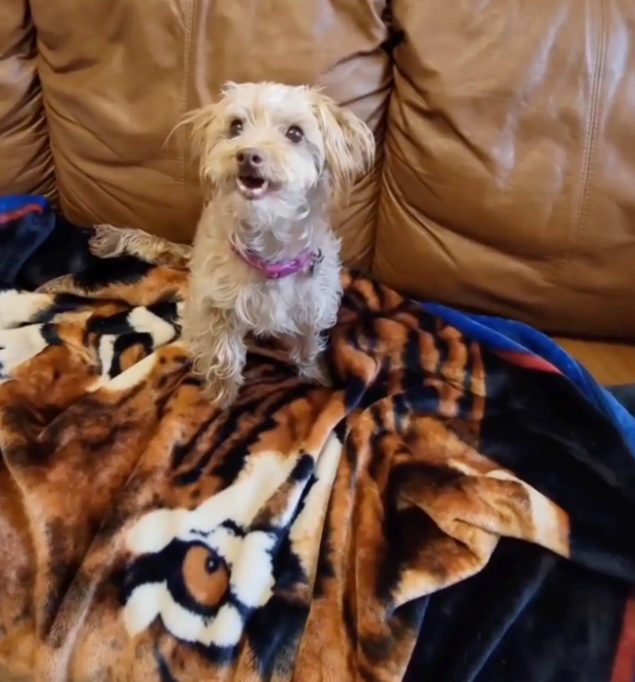
But the senior dog never left her spot.
She just watched.
There’s something especially moving about that kind of stillness. It isn’t disinterest—it’s endurance. It’s a quiet kind of hope that doesn’t demand attention but holds on anyway.
Shelter and adoption staff often notice this dynamic during events.
Even when senior dogs are affectionate, well-behaved, and already trained, they can be overshadowed by younger dogs simply due to perception.
Studies and rescue workers alike point out that age is one of the biggest factors influencing adoption decisions, even when older dogs may actually be easier companions in many home environments.
Still, none of that makes the moment easier to watch.
Because in real time, it doesn’t feel like statistics.
It feels personal.
A dog sitting quietly while others are chosen around her.
As the event continued, the pattern stayed the same.
Puppies were lifted into arms, families gathered around kennels, and conversations filled with “maybe this one” and “what about that one.”
And still, she waited.
Not desperate.
Not dramatic.
Just present.
It’s the kind of scene that often lingers with volunteers long after the event ends. Not because it’s unusual, but because it’s so familiar.
Senior dogs arrive at events again and again with hope in their posture, only to leave with the same uncertainty they came with.
And yet, something important happens in moments like this too.
Even when they aren’t immediately chosen, they are seen.
Someone notices.
Someone remembers.
Someone thinks about them after the crowd moves on.
That quiet recognition is often what leads to the eventual turning point. A second look online. A shared post.
A conversation later that day that changes everything.
For many senior dogs, adoption doesn’t happen in the loudest moment of the event—it happens afterward, when someone replays the memory of the dog who waited.
The one who didn’t compete.
The one who simply stayed where she was.
This senior dog’s story sits in that space of waiting. Not yet resolved in the moment, but carrying the kind of quiet weight that often leads somewhere better.
Because even when the room is full of puppies being chosen first…
there is still a chance that someone, somewhere, is thinking about the dog who waited the longest.