When danger struck an entire city, one of its most important defenders didn’t carry a weapon, wear a uniform, or speak a single word.
He had four paws, a powerful nose, and an extraordinary ability to find what others couldn’t.
His name was Zanjeer.
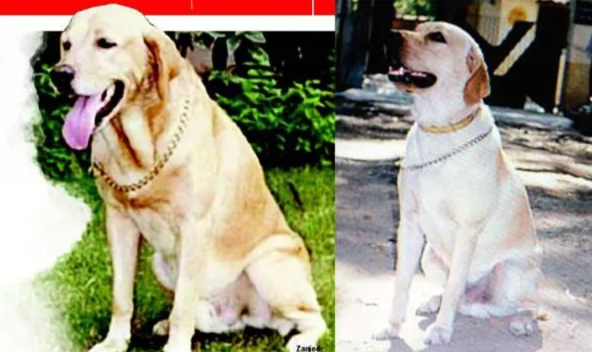
And during one of the darkest chapters in Mumbai’s history, this remarkable Labrador Retriever helped police uncover deadly explosives and weapons that could have claimed countless more lives.
He couldn’t understand the full scale of the tragedy unfolding around him. He couldn’t know how many families might be spared heartbreak because of his work.
He simply did what he had been trained to do.
And that made all the difference.
A City in Crisis
In March 1993, Mumbai, India, was rocked by a series of devastating bomb explosions.
Twelve explosions struck locations across the city, killing 257 people and injuring more than 700 others.
The attacks left communities grieving and authorities facing an urgent challenge: finding additional weapons and explosives before they could cause even more destruction.
That’s when Zanjeer and his handlers became an essential part of the effort.
The Labrador had joined the Mumbai Police Bomb Detection and Disposal Squad in December 1992, after receiving specialized training.
His original nickname was Ginger, inspired by his golden-colored coat. He later became widely known as Zanjeer, a name associated with a popular 1973 Bollywood film.
But whatever people called him, his abilities were what mattered most.
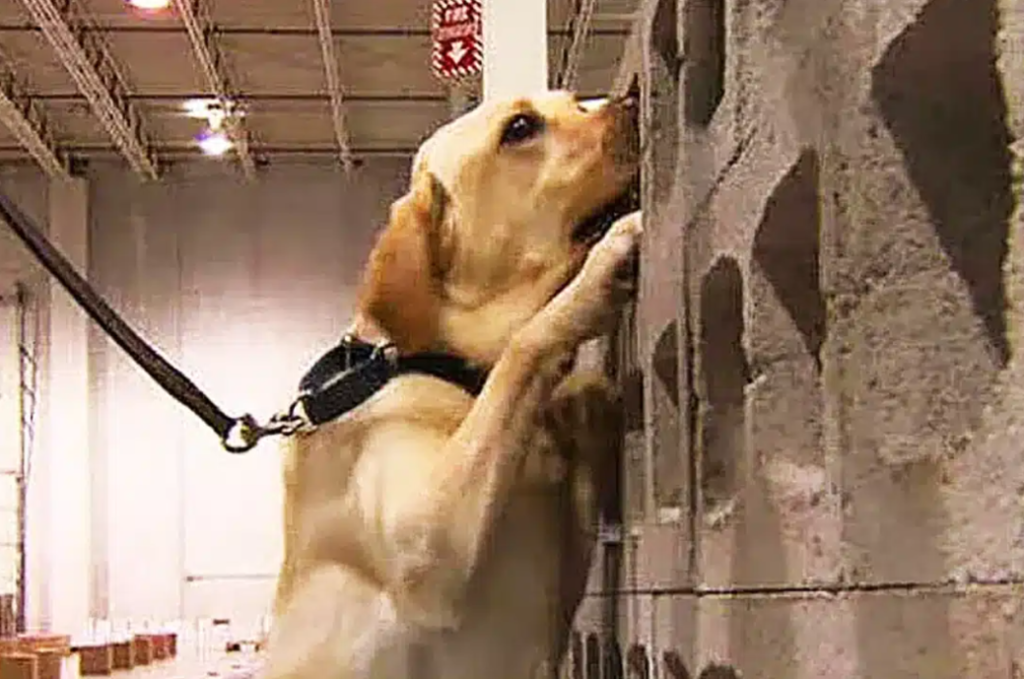
Zanjeer could detect explosives hidden from human view. In a situation where a single overlooked device could mean disaster, that ability was invaluable.
And soon, the four-legged officer would demonstrate just how extraordinary he was.
The Nose That Found What Others Couldn’t
As police searched for dangerous materials connected to the attacks, Zanjeer helped uncover weapons and explosives at several locations.
One of his reported discoveries involved a scooter containing explosives on Dhanji Street.
He also helped police investigate suspicious suitcases near Siddhivinayak Temple. Those cases contained weapons, including rifles, pistols, and grenades.
Additional weapons were discovered in suitcases at Zaveri Bazaar.
These weren’t ordinary finds. They were dangerous materials that could have been used to cause further devastation.
Zanjeer’s work helped investigators locate an enormous quantity of explosives and ammunition.
Reports credit him with detecting approximately 3,329 kilograms of RDX, 600 detonators, 249 hand grenades, and thousands of rounds of ammunition.
He was also credited with helping uncover three additional bombs in the days following the attacks.
Think about that for a moment.
Behind those numbers were real people who might otherwise have faced unimaginable danger.
Zanjeer couldn’t receive instructions in the same way a human officer could. Instead, he relied on his training, his senses, and the relationship he had built with his handlers.
When he detected something suspicious, his response gave the officers a reason to investigate.
His work became a powerful reminder that sometimes, the smallest member of a team can make an enormous difference.
More Than a One-Time Hero
Zanjeer’s contribution didn’t end with the immediate aftermath of the bombings.
Throughout his career, he was credited with locating additional dangerous materials, including homemade bombs, military explosives, and petrol bombs.
His work helped establish his reputation as one of India’s most remarkable detection dogs.
For the officers who worked alongside him, he wasn’t simply an animal performing a job.
He was a trusted partner.
Police dog handlers depend on their canine companions to detect things that human senses cannot reliably identify. That relationship requires training, patience, and confidence in one another.
In Zanjeer’s case, his abilities earned him extraordinary respect.
His story also helped demonstrate the importance of trained detection dogs in public safety, where their specialized skills can assist officers in situations involving potentially deadly threats.
But every working dog eventually faces a day when its service comes to an end.
And for Zanjeer, that day arrived far too soon.
A Hero Receives His Final Honors
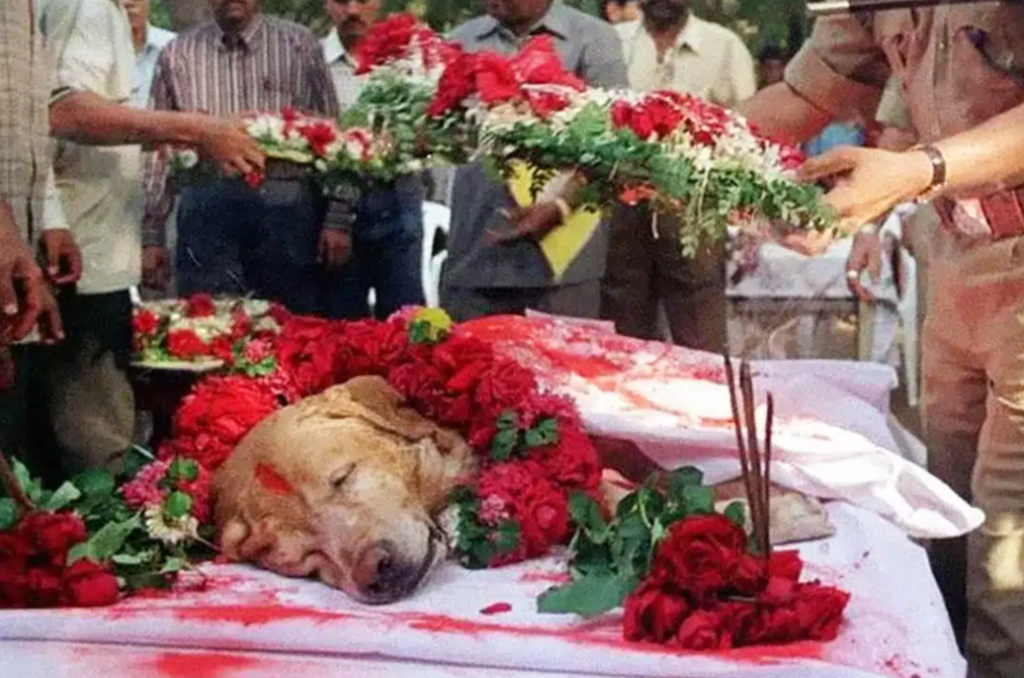
Zanjeer died on November 16, 2000, at approximately eight years old. Reports have differed on the precise medical cause of his death, with some accounts identifying bone cancer.
His passing marked the loss of a remarkable member of the Mumbai Police.
But his fellow officers did not let him leave this world without recognition.
Zanjeer was given a funeral with full state honors, a tribute that reflected the extraordinary contribution he had made during his years of service.
It was a fitting farewell for a dog whose work had helped protect so many people.
He had never asked for a medal. He had never expected applause.
He had simply served faithfully beside the officers who depended on him.
Yet his story deserved to be told.
The Legacy of a Very Good Dog
It’s easy to measure heroism in terms of rank, medals, and public recognition.
But Zanjeer’s story reminds us that courage can come in a very different form.
Sometimes, it has four legs and a wagging tail.
Sometimes, it works quietly beside people who trust it with their lives.
And sometimes, its greatest accomplishments happen without the hero ever understanding the magnitude of what he’s done.
Zanjeer couldn’t know how many families might have been spared additional grief. He couldn’t understand the gratitude of people who would never learn his name.
But his work mattered all the same.
He was a police dog, a loyal partner, and an extraordinary example of what animals can contribute when their abilities are recognized and carefully developed.
His life also reminds us to honor working dogs whose service often goes unnoticed long after the headlines fade.
Zanjeer may have been a Labrador, but his legacy reaches far beyond his breed.
He showed the world that heroism doesn’t always arrive in a uniform.
Sometimes, it arrives on four paws—and changes history one discovery at a time.