Some rescue moments don’t need narration.
The emotion is already written into them.
This is one of those stories—the kind that begins in fear, moves through urgency, and ends in something so unexpectedly tender it stops people mid-scroll.
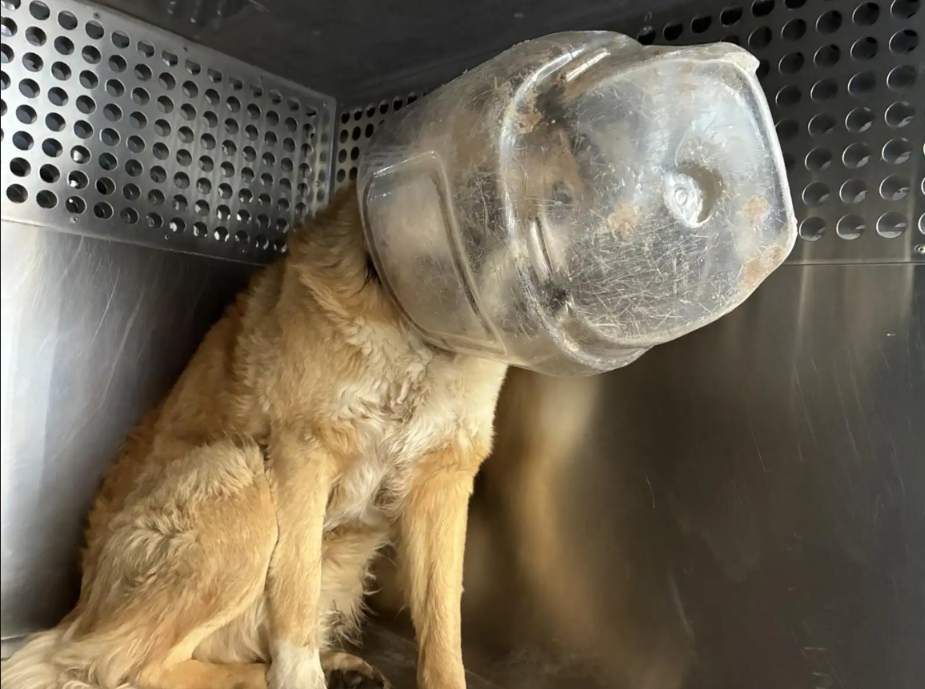
It started with a dog in distress, found with his head trapped inside a rigid plastic jug.
He was disoriented, unable to see clearly, and likely terrified as he moved through an environment he couldn’t fully understand.
Situations like this are dangerous not just because of the physical restriction, but because they strip away a dog’s ability to interpret the world around them.
Every sound becomes uncertain. Every movement becomes a risk.
And yet, even in that condition, survival instinct keeps them going.
When rescuers finally arrived, their focus was immediate and precise: stabilize the situation, calm the dog, and carefully remove the obstruction without causing additional harm.
It’s a delicate process—fast enough to prevent prolonged distress, but controlled enough to avoid panic or injury.
The jug came off.
And everything changed in seconds.
What rescuers often prepare for in moments like this is unpredictability. A newly freed animal might bolt. They might freeze.
They might react defensively out of confusion or lingering fear.
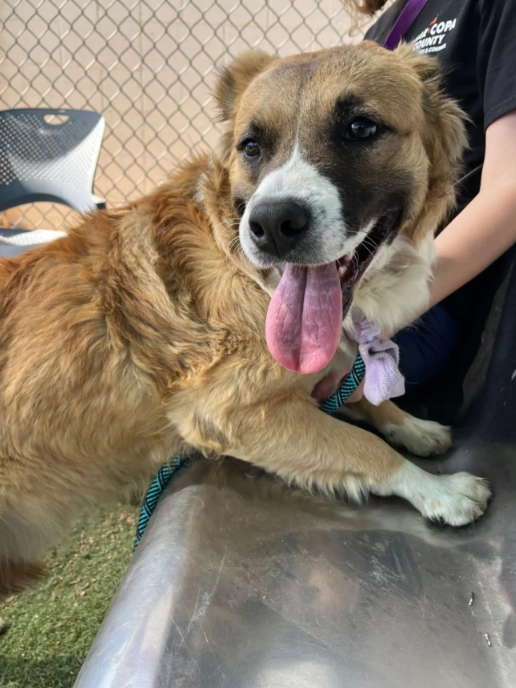
But this dog didn’t do any of those things.
Instead, something remarkable happened.
He paused.
Then he moved forward.
Slowly, deliberately—straight toward the person who had just helped him.
And then he did something that surprised everyone watching.
He leaned in.
Not away.
Not back into fear.
Forward.
Into contact.
He sought out a hug from his rescuer, pressing close in a way that felt less like confusion and more like recognition.
A quiet, instinctive gesture that said what words never could: you are safe now.
That moment is what transformed the story from a rescue into something much deeper.
Because it wasn’t just about removing a piece of plastic.
It was about what came after.
The shift from panic to trust. From survival to connection.
Dogs don’t separate emotion into neat categories the way humans do. Relief, safety, gratitude—they often blend into behavior instead of language.
A physical closeness becomes the clearest expression of “thank you” they have.
And in this case, it came immediately.
No hesitation.
No recovery period before connection.
Just an instinctive move toward comfort, as if the dog needed to make sure the people around him were real, present, and no longer a threat.
For rescuers, moments like this carry weight that goes far beyond the immediate situation. They are reminders that fear is not permanent.
That even after distress, animals can return to trust faster than we expect—when given the chance.
It also reflects something many animal care workers quietly understand: dogs often don’t distinguish between “rescuer” and “safe person” in the abstract.
They respond to the feeling of being helped, and they anchor to it quickly when fear lifts.
In this case, that anchor became physical closeness.
A hug.
A lean-in.
A quiet refusal to return to distance after experiencing safety for the first time in that moment.
By the time the situation settled, what remained wasn’t just a freed animal—but a connection formed in seconds under pressure, sealed by instinct rather than instruction.
And that’s why this story resonates so widely.
Because it shows something simple but powerful:
Sometimes, the first thing a dog does after being saved… is not run away.
It’s to stay close to the person who made survival possible.