It sounds like a dream.
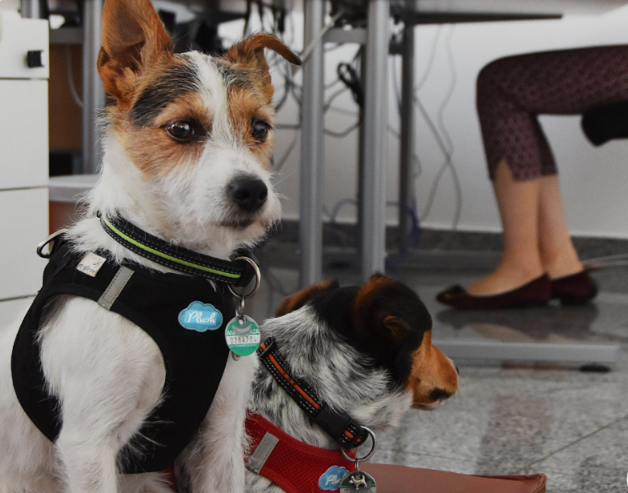
You walk into the office… and there’s a dog wagging its tail under a desk.
Another one snoozing quietly in the corner.
Someone laughing during a quick break, scratching a happy pup behind the ears.
It feels lighter.
Warmer.
More human.
And that’s exactly why more companies are embracing dog-friendly workplaces—not as a gimmick, but as a real strategy to improve morale, reduce stress, and strengthen team connection.
But here’s the truth most people don’t talk about:
A dog-friendly office doesn’t just happen.
It’s built.
And if you get it wrong, it can quickly turn from a dream environment into chaos—for both people and dogs.
So what actually makes it work?
It starts with structure.
Not strict rules for the sake of control—but clear expectations that protect everyone in the space.
Because when dogs are involved, you’re not just managing employees.
You’re managing energy, behavior, and interactions across species.

That’s why one of the most important first steps is making sure your office is even suitable for dogs in the first place. Some buildings don’t allow pets. Some environments—like labs or industrial spaces—simply aren’t safe.
And even if the space allows it, there needs to be a clear agreement about how many dogs can be present at one time.
Capacity matters.
Too many dogs in one space isn’t fun—it’s overwhelming.
Once the environment is set, the next layer is screening.
Not every dog is an “office dog.”
It’s easy to assume that because a dog is friendly at home, they’ll behave the same way at work. But an office is filled with new smells, unfamiliar people, unexpected noises, and constant movement.
That’s a completely different environment.
Dogs need to be:
• healthy and up-to-date on vaccinations
• comfortable around people and other dogs
• able to settle calmly for long periods
Without that baseline, problems don’t just happen—they escalate.
That’s why many dog-friendly workplaces use a simple approval process to ensure each dog is ready before stepping into the office environment.
Then comes something that seems small—but makes a huge difference:
space design.
Dogs need boundaries.
Not restrictions—but defined areas where they can relax without being overstimulated.
That might mean:
• small gated zones near desks
• designated play areas
• quiet corners for rest
This gives dogs the freedom to exist in the office without constantly interacting with everything around them.
Because here’s the reality:
A dog that never gets a break becomes a stressed dog.
And a stressed dog becomes a disruptive one.
Which brings us to one of the most important rules:
control.
Even in a dog-friendly office, dogs shouldn’t be roaming freely.
Leashes or controlled movement policies help prevent sudden interactions, accidental conflicts, or distractions that break focus.
It’s not about limiting the dog.
It’s about maintaining a predictable environment.
And predictability is what keeps both people and pets comfortable.
Another surprisingly effective strategy?
Communication—without words.
Some offices use colored tags or bandanas to signal a dog’s temperament.
Friendly.
Shy.
Needs space.
Ask before approaching.
It sounds simple, but it removes guesswork—and prevents misunderstandings before they happen.
Because not every dog wants attention.
And not every person is comfortable giving it.
That balance matters more than people think.
Of course, even in the best setups, things go wrong.
Dogs bark.
They get restless.
They have accidents.
That’s why preparation matters just as much as prevention.
Having cleaning supplies, clear escalation plans, and a process for handling behavioral issues ensures that one problem doesn’t disrupt the entire environment.
And then there’s the part many people overlook entirely:
the dog’s experience.
An office might feel exciting to humans—but for dogs, it can be overstimulating or even stressful if their needs aren’t met.
They still need:
• breaks
• outdoor time
• mental stimulation
• a place to rest
Without that, even the best-behaved dog can struggle.
That’s why proximity to outdoor space—like parks or green areas—is a major advantage. It gives dogs a chance to reset, move, and decompress during the day.
And when that’s built into the routine, everything runs smoother.
For the dog.
For the owner.
For the entire team.
Because a truly dog-friendly office isn’t just about allowing dogs inside.
It’s about designing a system where they can exist comfortably without disrupting the people around them.
And when it’s done right?
Something shifts.
Stress levels drop.
Conversations start more naturally.
People feel more relaxed—and more connected.
Not because of policy.
But because of presence.
A dog lying quietly beside a desk.
A shared moment between coworkers.
A reminder, in the middle of a busy day, that work doesn’t have to feel so rigid.
But that only happens when intention meets execution.
Because bringing dogs into the office isn’t the goal.
Creating an environment where everyone—human and canine—can thrive…
That’s what actually makes it work.