There’s nothing quite like spending a peaceful day on the water, and it’s even better when your four-legged best friend can come along for the ride.
Whether you’re exploring a quiet lake, paddling down a gentle river, or soaking in scenic views, kayaking with your dog can become one of your favorite outdoor activities.
But before your pup hops aboard, it’s important to remember that kayaking is a learned experience—not something most dogs instinctively know how to enjoy.
The secret to a successful adventure is preparation. With patience, positive reinforcement, and a little practice, your dog can learn to feel calm, confident, and safe on the water.
Develop Your Dog’s Confidence Before You Launch
One of the biggest mistakes new paddlers make is introducing their dog to the kayak only after it’s floating.
For many dogs, an unstable boat can feel strange and even frightening. Instead, begin all of your training on dry land where the kayak stays mostly still and your dog can explore without feeling overwhelmed.
Allow your dog to sniff the kayak and investigate it at their own pace. Reward every positive interaction, whether it’s simply approaching the boat, touching it with a paw, or climbing inside.
Once your dog is comfortable getting in, gently rock the kayak so they become familiar with the movement. Pair each small success with praise and treats to help them associate the motion with positive experiences rather than fear.
Teaching simple commands like “on” and “off” is also extremely helpful. These cues let your dog know when it’s appropriate to board or exit the kayak instead of jumping unexpectedly.
You can further build confidence by practicing basic obedience on slightly unstable surfaces. Asking your dog to sit, lie down, or stay balanced on something that moves teaches body awareness and self-control—skills that transfer directly to kayaking.
Teach Your Dog Where to Stay on the Kayak
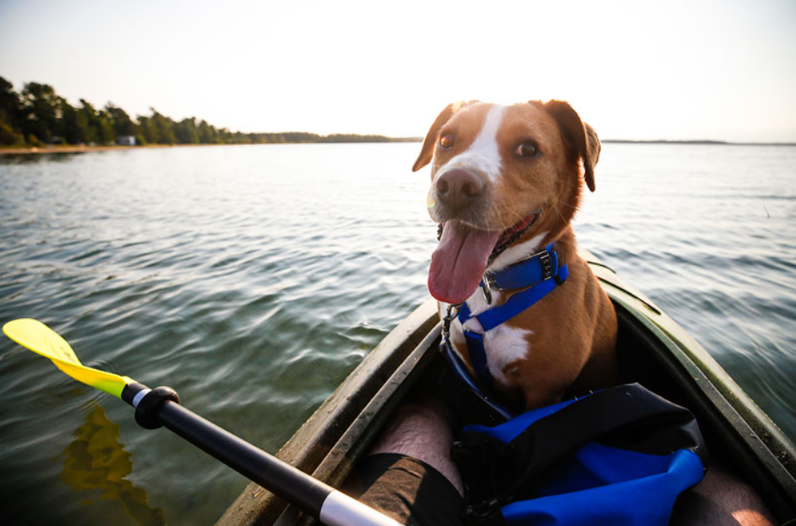
Once your dog feels comfortable inside the kayak, it’s time to establish where they’ll ride.
The ideal location depends on your kayak’s design and your dog’s size. Larger kayaks often provide extra room, while smaller models require your dog to remain in a specific position to help maintain balance.
Choose one designated spot and reward your dog whenever they relax there. Repeating this exercise helps your dog understand that this is their place throughout the trip.
Since kayaks often become slippery when wet, adding extra comfort and traction is a smart idea. Foam pads, yoga mats, or other non-slip materials provide better footing while making longer paddling sessions more enjoyable.
Keep in mind that dogs naturally shift positions from time to time. While they don’t need to stay perfectly still, they should learn to move calmly and avoid sudden movements that could upset the kayak’s balance.
Get Your Dog Comfortable With the Paddle
The paddle itself can be intimidating for dogs seeing it for the first time.
Before ever heading to the water, introduce it slowly while you’re practicing on land. Allow your dog to sniff it and reward calm behavior around it.
Next, sit in the kayak and mimic normal paddling motions. The movement, sound, and rhythm of paddling should become familiar long before your first launch.
By practicing this repeatedly, your dog learns that the paddle isn’t something to fear and that paddling simply means another fun adventure is about to begin.
Help Your Dog Love Their Life Jacket
Every dog should wear a properly fitted life jacket whenever they’re on the water, even if they’re an excellent swimmer.
Unexpected currents, fatigue, cold water, or accidental falls can quickly become dangerous. A well-fitting canine life jacket provides buoyancy and gives you an easy way to lift your dog back into the kayak if necessary.
Don’t wait until launch day to introduce the life jacket.
Instead, let your dog wear it around the house, during walks, and while playing outside. The more normal it feels, the less likely your dog is to become distracted or uncomfortable once you’re on the water.
Swimming practice is equally important.
Many dogs swim differently while wearing a flotation device because of the added buoyancy. Spend time in shallow water letting your dog adjust to the feeling while keeping the experience relaxed and positive.
The more comfortable your dog becomes in their life jacket, the more confident they’ll feel during future kayaking trips.
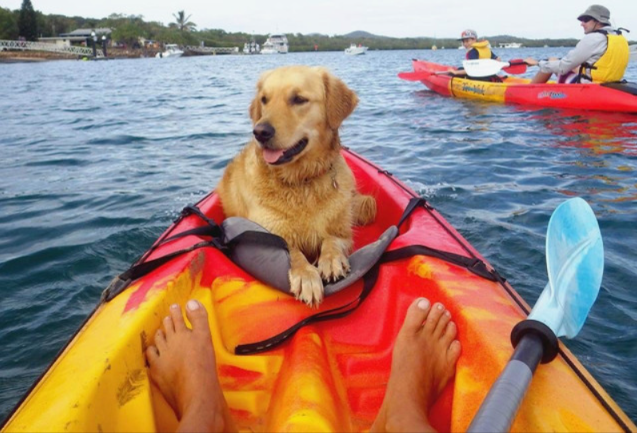
Taking It to the Water
Once your dog is confident on land, it’s finally time for the real adventure.
Choose a calm body of water with little boat traffic and an easy shoreline for launching. Quiet lakes and slow-moving rivers are excellent choices for beginners.
If possible, bring a friend to help stabilize the kayak while you get seated. Once you’re comfortable, invite your dog aboard using the same commands you’ve practiced during training.
Because the routine is already familiar, your dog is much more likely to board calmly and settle into their designated spot.
Keep your first outing short.
Even if everything goes perfectly, ending on a positive note builds confidence and leaves your dog eager for the next trip rather than tired or overwhelmed.
As your dog gains experience, they’ll gradually become more comfortable with passing boats, swimmers, birds, wildlife, and other distractions that naturally occur on the water.
If your dog struggles to stay calm around these distractions, spend more time practicing basic obedience before attempting longer paddles.
Enjoy the Journey Together
Kayaking with your dog isn’t about covering miles or paddling as fast as possible. It’s about sharing an unforgettable experience together.
Every successful outing builds trust between you and your dog while creating memories that last a lifetime. With proper preparation, plenty of patience, and consistent training, many dogs grow to love relaxing on the water just as much as their owners do.
Take things one step at a time, celebrate every small success, and always prioritize your dog’s comfort and safety.
Before long, you’ll have a dependable paddling partner who’s ready to explore lakes, rivers, and hidden waterways by your side—turning every kayaking trip into an adventure you’ll both look forward to.