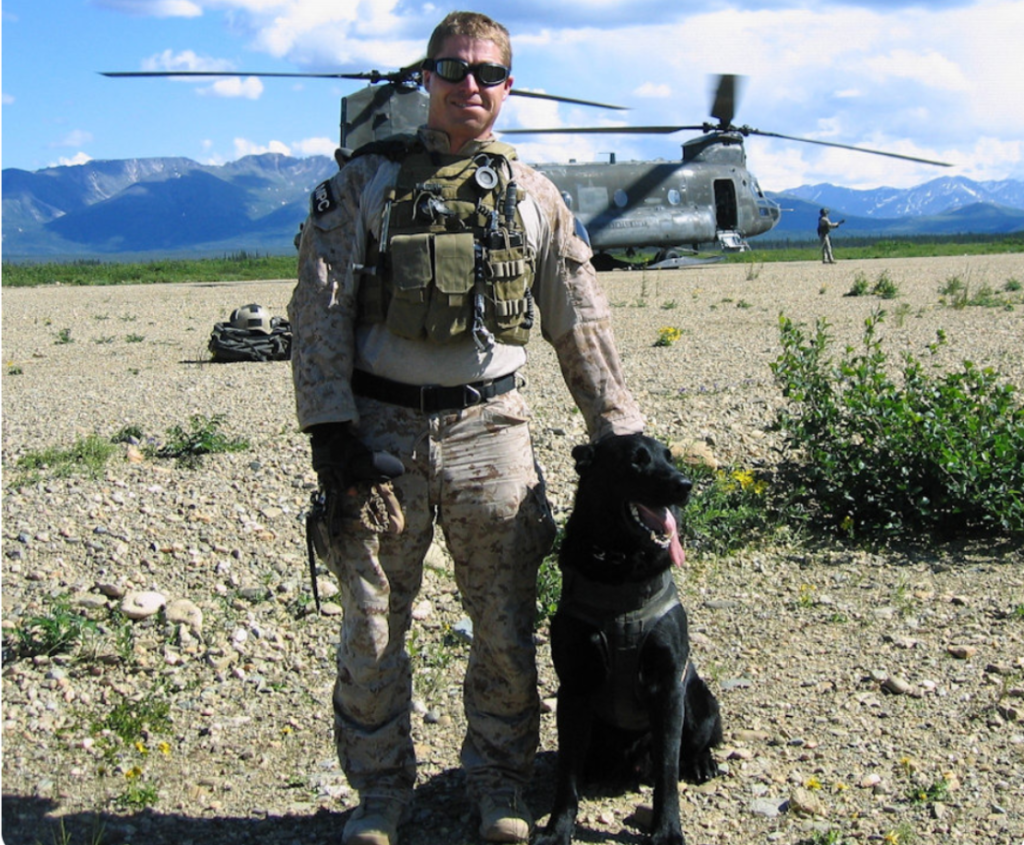
Some heroes don’t wear uniforms.
Some walk on four legs.
And some… do both.
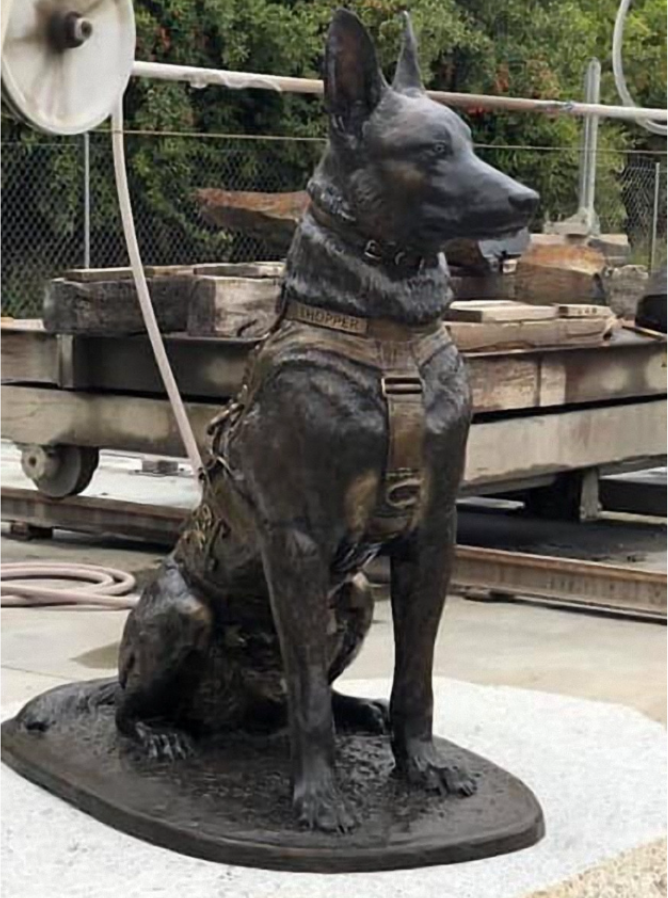
Chopper Leryka Maroshek wasn’t just any dog. He was a highly trained German Shepherd, born in the Czech Republic and selected for something far greater than an ordinary life. From the very beginning, his path was different—shaped by discipline, intelligence, and a purpose that would eventually place him in some of the most dangerous environments on earth.
He became a Multi-Purpose Canine.
A Military Working Dog.
And most notably, the first to successfully go through and graduate from the U.S. Navy SEALs K9 Teams Program.
That alone would have made him remarkable.
But Chopper’s story doesn’t stop at achievement.
It begins there.
A Dog Built for the Battlefield
Paired with Navy SEAL Trevor Maroshek, Chopper entered a world where precision meant survival and hesitation could cost lives. Their bond wasn’t casual—it was forged under pressure, built through training, and tested in real combat situations.
Together, they deployed to Iraq and Afghanistan.
Two tours.
Two environments where every mission carried risk.
And in those moments, Chopper wasn’t just a companion.
He was protection.
Detection.
Instinct.
He helped identify threats, prevent ambushes, and navigate dangers that humans alone might not detect in time. His work directly contributed to the safety of elite military units, including Navy SEALs, Delta Force, and other Special Operations personnel.
But one moment would define everything.
The Mission That Changed Everything
There was an operation that could have ended in catastrophe.
A large-scale threat—one that, if carried out successfully, would have resulted in the loss of dozens of elite operators. Seventy-four Navy SEALs. Twelve Delta Force members. Additional Special Operations personnel.
An entire force at risk.
But it didn’t happen.
Because Chopper and Trevor intervened.
Their actions helped stop what would have become one of the most devastating losses in a single attack involving special operations forces. It wasn’t luck. It was training, instinct, and trust working in perfect alignment.
Lives were saved.
Not a few.
Many.
And behind that outcome was a dog who had been trained to detect what others couldn’t—and act without hesitation.
That moment didn’t just define Chopper’s career.
It solidified his legacy.
From War to Wounds
War doesn’t end when deployment ends.
Trevor returned home—but not unchanged.
He had been wounded by two incendiary explosive device (I.E.D.) attacks, along with enduring multiple battlefield traumas. The physical injuries were only part of it. Like many veterans, he also carried something less visible—but equally heavy:
Post-Traumatic Stress Disorder (PTSD).
The transition from combat to civilian life is rarely simple. The body returns home—but the mind often takes longer.
And that’s where Chopper’s second mission began.
A Different Kind of Service
After his military career, Chopper was retired.
But he didn’t leave Trevor.
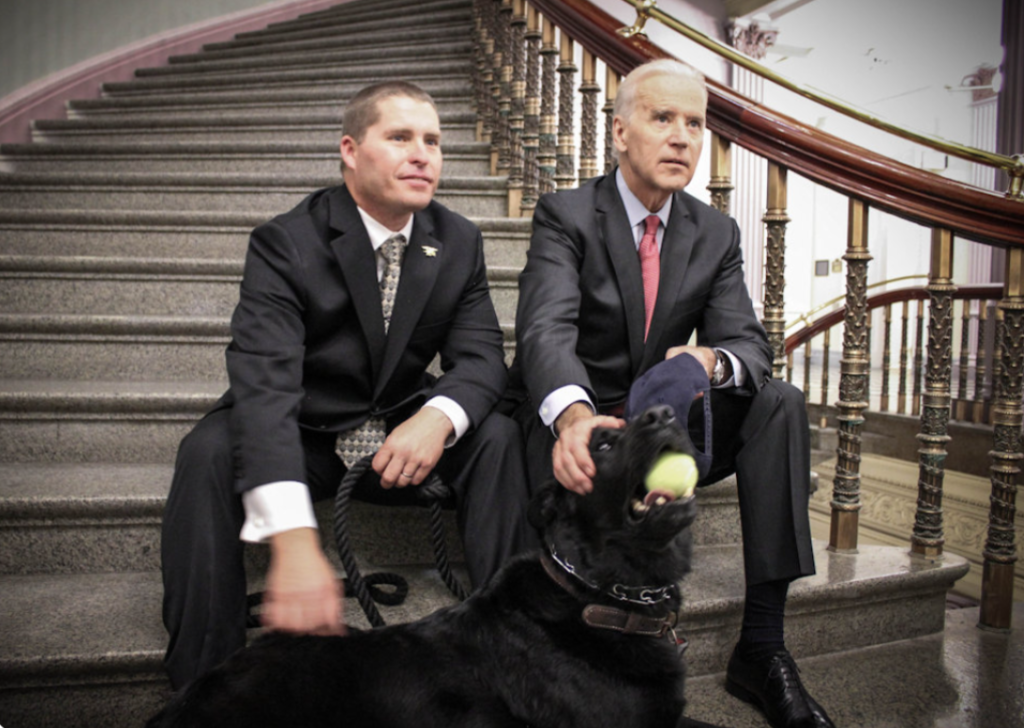
He was adopted by him.
And in that transition, something powerful happened.
The same dog who had protected lives on the battlefield now became a source of stability, grounding, and emotional support at home.
Chopper became more than a working dog.
He became a therapy dog.
A constant presence for someone navigating the lasting effects of war.
Because healing doesn’t happen all at once.
It happens in moments.
Quiet ones.
The kind where a dog simply stays close.
Where presence replaces silence.
Where connection slowly rebuilds what trauma disrupted.
Chopper didn’t just save Trevor in combat.
He continued saving him afterward—in a completely different way.
🇺🇸 The Bond Between Two Warriors
What makes this story resonate so deeply isn’t just the heroism—it’s the relationship behind it.
A man and a dog.
Both shaped by war.
Both carrying experiences most will never fully understand.
And yet, together, they formed something steady.
Reliable.
Unbreakable.
Trevor once described his belief that the German Shepherd is the greatest breed in the world—and for him, that belief wasn’t theoretical.
It was lived.
Because Chopper didn’t just perform tasks.
He showed loyalty in its purest form.
The Cost We Don’t Always See
Stories like this highlight something often overlooked.
The cost of war isn’t limited to what happens on the battlefield.
It extends into everyday life long after service ends.
Physical injuries.
Emotional trauma.
The challenge of adjusting to a world that feels completely different from the one left behind.
And for many veterans, support animals like Chopper aren’t just helpful.
They’re essential.
They provide structure.
Comfort.
A sense of safety that can’t always be recreated in other ways.
More Than a Hero
Chopper’s story has been told through documentaries like SEAL Dog and Frog Dog, reaching audiences who might never have otherwise understood the role dogs play in military operations—or in recovery afterward.
But beyond recognition, his story carries something deeper.
It shows that heroism doesn’t end when the mission is over.
Sometimes, it evolves.
From saving lives in combat…
To helping someone live with what came after.
And in that transition, Chopper proved something unforgettable:
A true hero doesn’t stop serving.
They just find new ways to do it.