No one ever expects an emergency.
Not on an ordinary day.
Not during a routine walk.
Not when everything feels completely normal.
But for dog owners, emergencies don’t send warnings.
They just… happen.
One moment your dog is fine.
The next, something feels off.
A limp.
A strange sound.
A sudden collapse.
And in that moment, there’s no time to Google. No time to hesitate.
Only time to act.
That’s where first aid comes in.
Not as a replacement for a veterinarian—but as the critical first response that can stabilize your dog, reduce pain, and, in some cases, save their life.
The truth is, most emergencies don’t start in a clinic.
They start at home.
Or on the road.
Or in a park.
Or somewhere far from immediate help.
Which means preparation isn’t optional.
It’s essential.
The first step isn’t learning techniques.
It’s mindset.
In an emergency, your dog will look to you.
And dogs tend to mirror human energy—panic creates more panic, while calm behavior helps keep them steady.
That’s why staying composed, speaking gently, and moving carefully isn’t just helpful—it’s part of the response.
Then comes assessment.
Before rushing in, you need to quickly scan the environment.
Is there traffic nearby?
Water? Fire? Hazardous materials?
Your safety matters too.
Only once it’s safe should you approach your dog and move them away from danger.
From there, everything becomes about priority.
Breathing.
Heartbeat.
Bleeding.
If your dog isn’t breathing or has no pulse, CPR may be necessary—a combination of chest compressions and rescue breathing used only in critical situations.
If they are breathing, your focus shifts.
Look for visible injuries.
Check for bleeding.
Observe behavior.
Bleeding, for example, requires immediate action.
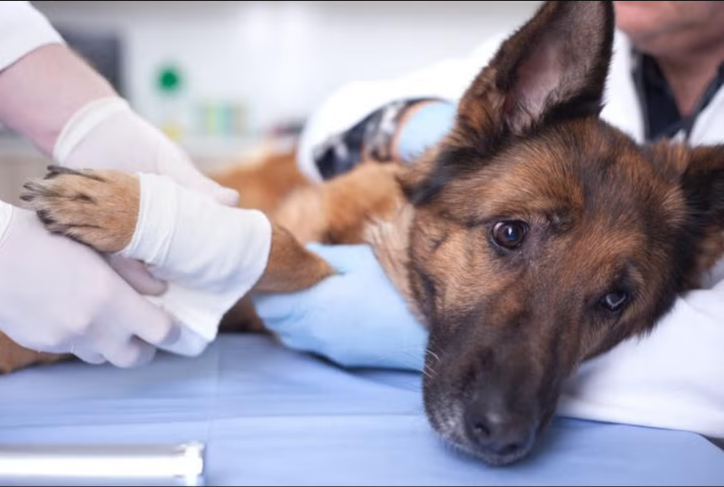
The most effective method is simple but precise: apply firm, direct pressure using gauze or cloth and hold it steady until clotting begins.
No checking. No lifting.
Just pressure.
Other emergencies look different—but are just as urgent.
Choking can happen quickly, especially with curious dogs who chew on anything they find. Signs include gagging, pawing at the mouth, or difficulty breathing.
Heatstroke may show up as heavy panting, drooling, or loss of coordination—and requires immediate cooling and veterinary care.
Seizures? Keep your dog safe from injury, avoid restraining them, and seek help immediately after.
Every situation is different.
But they all share one thing:
Time matters.
That’s why preparation goes beyond knowledge.
It includes having the right tools ready.
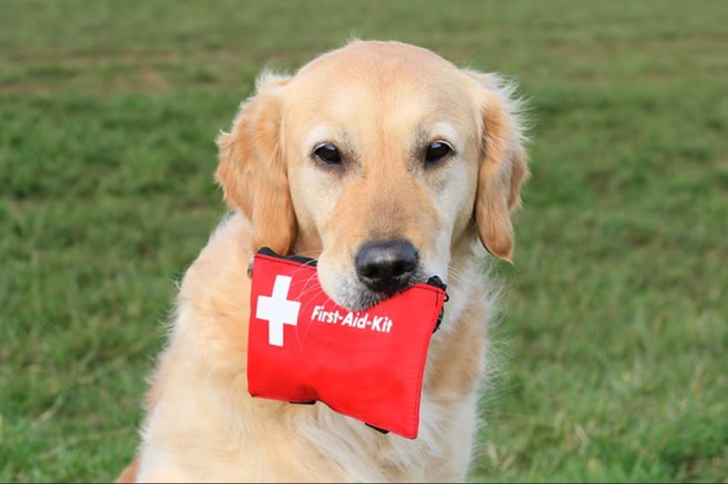
A proper dog first aid kit isn’t complicated—but it is specific.
Essentials include gauze, bandages, adhesive tape, scissors, gloves, antiseptic supplies, and even a muzzle for safety during handling.
Because even the gentlest dog can react unpredictably when in pain.
Other items—like a thermometer, saline solution, cold packs, and emergency contact numbers—can make a critical difference when seconds count.
And one detail many owners overlook?
Identification.
In emergencies, dogs may panic and run.
Collars, ID tags, and microchips significantly increase the chances of being reunited if that happens.

But perhaps the most overlooked part of preparation is this:
Knowing what’s normal.
Your dog’s regular heart rate.
Their breathing pattern.
Their gum color.
Because in a crisis, you won’t have time to guess.
You’ll need to recognize immediately when something isn’t right.
And even when you do everything correctly—every step, every technique—there’s one rule that never changes:
First aid is only the beginning.
No matter how minor or serious the situation seems, veterinary care is always the next step. First aid stabilizes—but it doesn’t replace professional treatment.
It’s easy to assume emergencies are rare.
That they happen to other people.
Other dogs.
Other situations.
But the reality is simpler—and more urgent:
If you have a dog, you will face something unexpected at some point.
The difference isn’t whether it happens.
It’s whether you’re ready when it does.
Because in that moment—when your dog needs you most—knowledge becomes action.
Preparation becomes confidence.
And your response becomes the reason they get through it.
Not every emergency can be prevented.
But many can be handled.
And sometimes… that’s everything.