It looks effortless in photos.
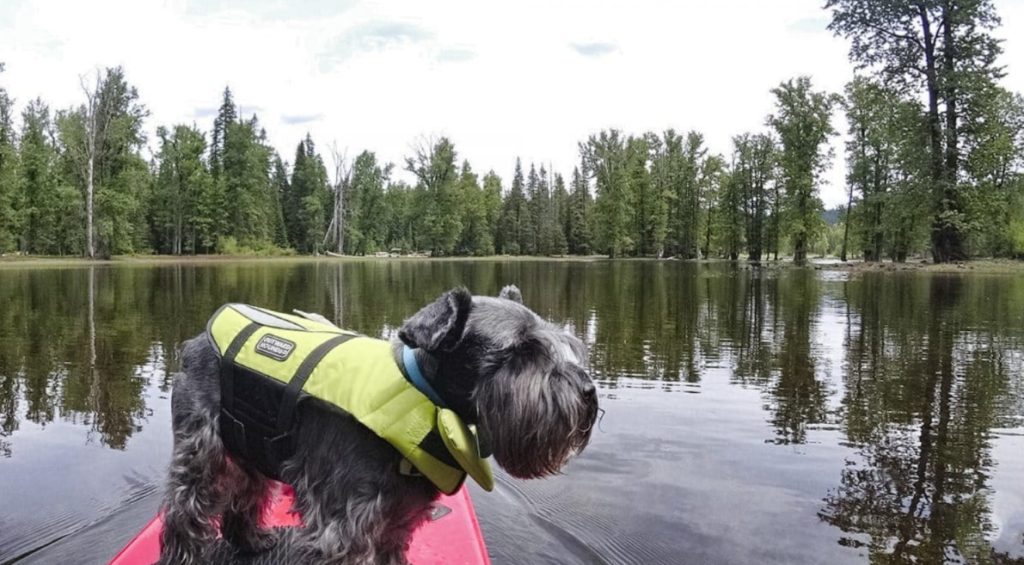
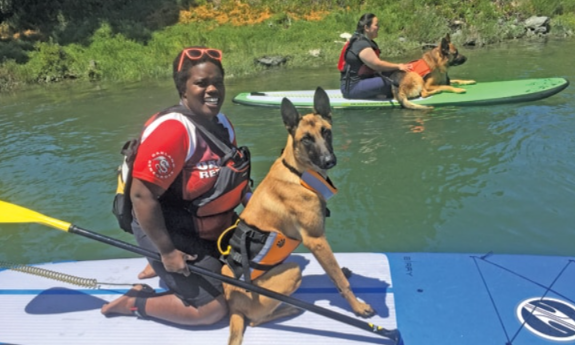
A calm lake. A steady board. A dog sitting confidently at the front, ears up, eyes scanning the horizon like they were born for it.
But the reality?
Paddleboarding with your dog doesn’t start that way.
It’s built—step by step.
Because while some dogs take to the water naturally, others need time to understand what’s happening beneath their paws.
A floating surface, shifting balance, unfamiliar movement—it’s a completely new experience.
And how you introduce it determines everything that comes next.
The first rule is simple:
Don’t start on the water.
Before your dog ever steps onto a paddleboard in a lake or ocean, they need to get comfortable with it on land. Let them sniff it.
Walk around it. Step on and off while it’s stable.
This removes the first layer of uncertainty.
Because once the board starts moving, everything becomes more intense.
The next step is stability training.
Even on land, you can gently shift the board to mimic movement.
Not enough to scare them—but enough to introduce the idea that this surface isn’t fixed.
Reward calm behavior.
Reinforce confidence.
If your dog feels secure here, transitioning to water becomes much easier.
And when you do move to water, choose your environment carefully.
Calm, flat water is essential.
No waves.
No strong currents.
No crowded areas.
Early experiences shape your dog’s perception. If their first attempt feels chaotic or overwhelming, they’re far more likely to resist future attempts.
Start small.
Shallow water.
Short sessions.
Let your dog step onto the board while it’s partially grounded so it doesn’t drift unexpectedly.
From there, gently push off.
Just a few feet.
Then back.
This isn’t about distance—it’s about trust.
One of the most important pieces of equipment you’ll need is a properly fitted dog life jacket.
Even strong swimmers benefit from the added buoyancy and safety, especially if they panic or fall unexpectedly.
A good life jacket also includes a handle, which allows you to lift your dog back onto the board if needed.
And yes—falling will happen.
That’s why it’s critical to teach your dog how to reboard.
Practice this intentionally.
Guide them back onto the board.
Reward the behavior.
Make it part of the experience, not something stressful or confusing.
Because the goal isn’t to avoid mistakes.
It’s to make recovery feel easy.
Positioning also matters more than most people expect.
Smaller dogs can sit or stand near the front of the board. Larger dogs should stay closer to the center, where the board is most stable.
And movement?
That’s where many sessions fall apart.
Excited dogs shift their weight suddenly—jumping, turning, reacting to distractions. That’s what causes imbalance.
So before you even think about longer paddles, your dog needs a reliable “stay” or “settle” cue.
Calm dogs make stable boards.
Stable boards create positive experiences.
Another overlooked factor is temperature.
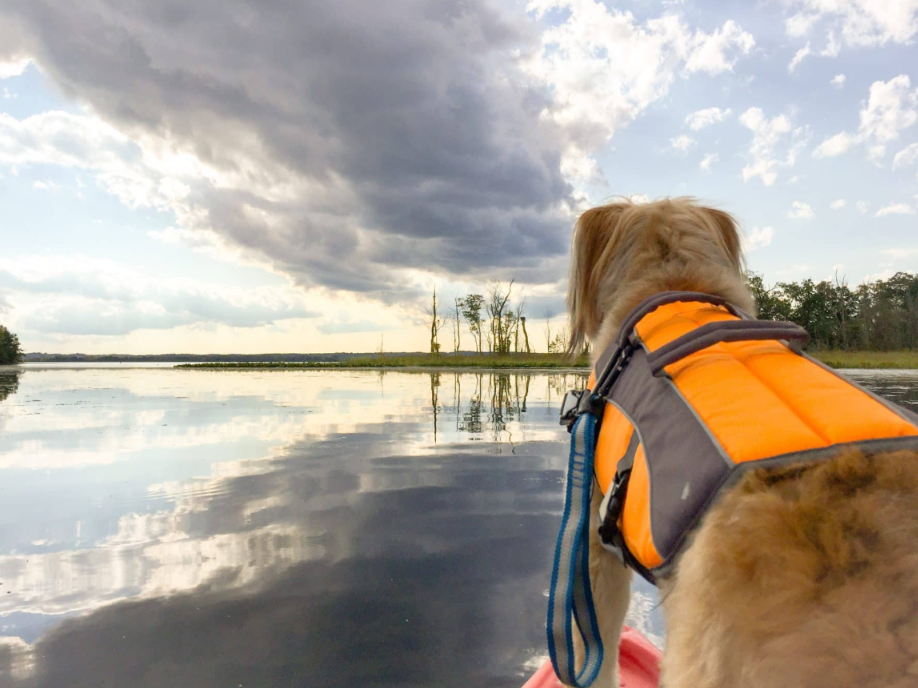
Water might feel refreshing, but prolonged exposure—especially in cooler conditions—can affect your dog more than you realize.
Keep sessions short, monitor their energy, and give them breaks.
And always bring fresh water.
Dogs can be tempted to drink from lakes or oceans, which can lead to stomach issues or worse depending on the environment.
Now here’s something most people don’t talk about:
Not every dog will love paddleboarding.
And that’s okay.
Some dogs prefer solid ground.
Some don’t enjoy water.
And forcing the experience can do more harm than good.
The goal isn’t to create a picture-perfect moment.
It’s to create a positive one.
But when it works?
It really works.
You feel it in the stillness.
In the way your dog settles into the rhythm of the board.
In the quiet understanding that you’re doing something together—something that requires trust on both sides.
Because paddleboarding with your dog isn’t just an activity.
It’s a shared balance.
Your movement affects them.
Their movement affects you.
And somewhere in that coordination, something shifts.
It becomes less about control…
and more about connection.
A dog who once hesitated now stands steady.
A moment that once felt uncertain becomes routine.
And what started as something new becomes something familiar.
Not perfect.
Not always smooth.
But shared.
And that’s what makes it worth it.
Because at the end of the day, it’s not about how far you go.
It’s about how well you move together.