Shelters are full of small, everyday moments that carry enormous emotional weight.
Not always dramatic. Not always loud.
Sometimes, it’s just a dog watching another dog leave.
And understanding, in his own way, that something has changed forever.
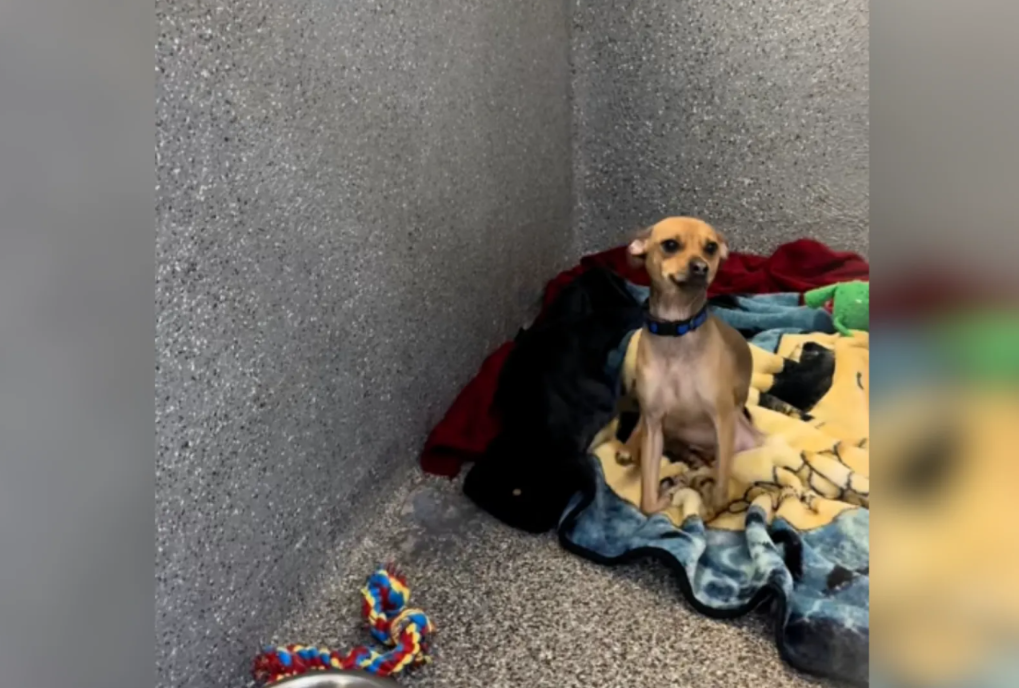
That was the reality for a small Chihuahua named Finn.
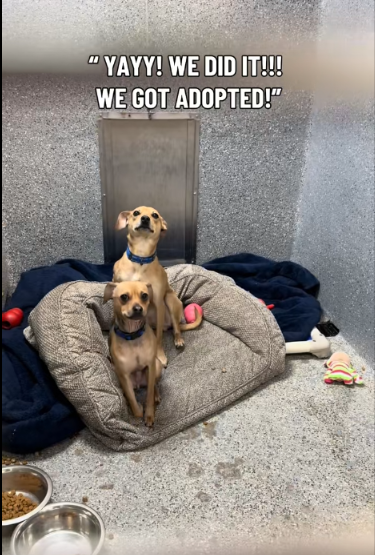
He wasn’t alone in the world of the shelter. He had a companion—another little dog who shared his space, his routine, and the quiet rhythm of waiting for something better.
They weren’t officially bonded on paper.
But in every meaningful way that mattered to them, they were inseparable.
So when the day came that Finn’s friend was chosen for adoption, everything shifted in an instant.
A leash was clipped.
A door opened.
And one of them walked out into a new life.
Finn stayed behind.
There’s a particular kind of silence that follows moments like that.
It isn’t empty.
It’s heavy.
And Finn felt it immediately.
He sat in his kennel, still and confused, watching the direction his friend had gone. Not frantic. Not vocal. Just quietly processing a change he couldn’t understand.
Because from his perspective, nothing about the world had prepared him for this kind of separation.
One moment there was companionship.
The next, there wasn’t.
For shelter dogs, bonds form quickly. Not because of long histories or shared pasts, but because of shared experience. Same space. Same routine. Same uncertainty.
That creates connection.
And when that connection breaks, even temporarily, it leaves a noticeable absence.
Finn didn’t have language for what he was feeling.
But his behavior said enough.
He waited.
Looked around.
Paused at familiar sounds that no longer meant anything.
It was as if he expected his friend to return at any moment, as though the departure hadn’t fully registered yet.
But the story didn’t end there.
Because moments like this rarely go unnoticed by the people working inside shelters.
Volunteers and staff see these reactions every day—but some moments stand out more than others.
And Finn’s quiet response was one of them.
A video of the scene began circulating, capturing not just the adoption of one dog, but the emotional aftermath for the one left behind.
And people noticed something important:
Finn wasn’t just “a dog in a kennel.”
He was a dog who felt deeply, even in silence.
That shift in attention mattered.
Comments began pouring in. Not just sympathy for the adopted dog’s happy ending—but concern for the one still waiting.
People asked about Finn. About his story. About whether he had a chance of finding a home too.
And just like that, visibility changed.
Because in shelters, visibility is everything.
One adoption can feel like closure for one story—but it can also open a new chapter for another dog who suddenly finds themselves seen.
Finn became that dog.
Not the one left behind in the emotional sense anymore—but the one people started to notice.
And that’s where shelter stories often turn.
Not in big dramatic rescues.
But in quiet shifts of attention.
A photo shared.
A video watched.
A name remembered.
Finn didn’t need to understand why his friend left.
He only needed the world to notice that he was still there.
Still waiting.
Still hoping.
Still capable of forming another bond when the right person finally arrived.
Because in shelters, endings and beginnings often happen at the same time.
One dog walks out into a new life.
And another, just a few feet away, quietly steps closer to theirs.
And sometimes, that’s how the next story begins.