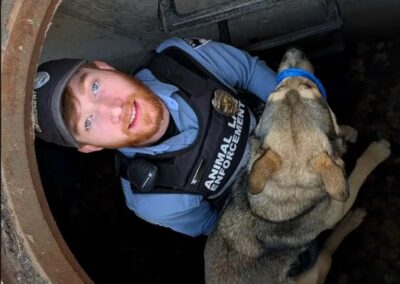
It started with a sound most people would miss.
Faint. Thin. Almost swallowed by traffic, water, and the noise of an ordinary day.
But someone stopped.
And that decision changed everything for one very small life trapped far below the surface.
A tiny puppy had fallen into a stormwater drain and couldn’t get out.
Down there, it was dark, cold, and disorienting. The kind of space where movement doesn’t lead anywhere and every attempt to climb just leads back to the same place.
Above ground, life kept going.
Until the cries were finally noticed.
Once the alarm was raised, everything shifted quickly.
Locals gathered. People leaned over the edge of the drain, trying to locate the exact position of the puppy below.
The problem was clear almost immediately—the space was too deep and too narrow for a simple reach-in rescue.
This wasn’t going to be easy.
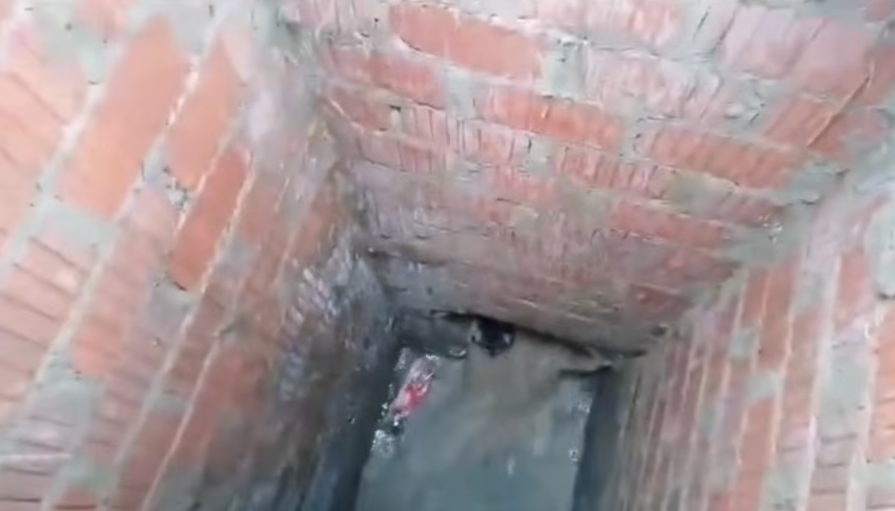
Rescuers from animal welfare services and emergency support teams were called in, along with community members who refused to step back and wait passively.
At first, they tried to reach the puppy from above. But the angle was wrong, and the drain was too deep. Nothing they attempted worked.
So they changed strategy.
Instead of going down from the top, they worked from the side.
Carefully, they accessed the drain from another opening, where the structure allowed just enough space for a person to enter. It was tight, uncomfortable, and not without risk—but it was the only real option left.
One rescuer crawled into the narrow tunnel.
Inside, visibility was limited. Movement was slow and deliberate. Every inch mattered.
And somewhere in that confined space, a frightened puppy was waiting.
The moment the rescuer reached the trapped animal, the urgency shifted from “locate” to “bring home.”
Carefully, the puppy was secured and guided back through the tight passage, inch by inch, until finally—
light.
When the rescuer emerged holding the tiny puppy, the reaction above ground was immediate.
Relief. Applause. Emotion that had been building through every failed attempt finally released at once.
The puppy, shaken but alive, was placed safely into waiting hands as people gathered around, making sure it was warm, stable, and no longer alone.
It’s easy to underestimate moments like this from the outside.
Just another rescue. Just another animal saved.
But for the people who stopped, called, climbed, crawled, and refused to give up—it was something more personal.
A decision to pay attention when it would have been easier not to.
Storm drains are dangerous places for animals. Once inside, escape is rarely possible without intervention. Water flow, depth, and structure all create conditions that quickly turn survivable situations into critical ones.
That’s why timing matters so much.
And why this rescue worked.
Someone heard.
Someone acted.
And others showed up.
In the end, it wasn’t just about technique or equipment.
It was about coordination between people who didn’t know each other before that day—but who all agreed, without needing to say it out loud, that the puppy below mattered enough to try.
And keep trying.
The puppy’s story didn’t end in the drain.
It ended in arms, not water. In warmth, not darkness. In noise, not silence.
And it’s a reminder that sometimes, the most important rescues don’t begin with planning.
They begin with someone stopping long enough to listen to what others walk past.